Main menu
You are here
The State of Latin American Politics
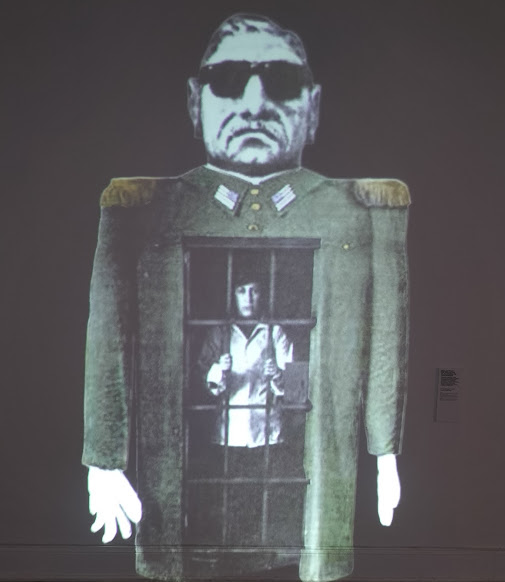 On January 3, the United States launched a military strike in Venezuela and abducted incumbent Venezuelan president Nicolás Maduro and his wife, Cilia Flores, transporting them to New York to face "narcoterrorism" charges. However, Trump and his administration have made it very clear that the action was undertaken to secure access to Venezuelan oil; after all, the United States government has a long history of its own illicit supply of narcotics. The abduction followed a series of airstrikes against Venezuelan vessels in the Caribbean Sea and Eastern Pacific Ocean, seizure of oil tankers, and imposing sanctions on eight Venezuelan economic and security officials for their role in the "suppression and subversion of democracy"; this from the very President who pardoned the participants who stormed Capitol Hill on January 6, 2024.
Such behaviour is quite normal for the United States against Central and South America and the Caribbean. The United States engaged in a number of military interventions (Cuba, Panama, Honduras, Nicaragua, Mexico, Haiti, and the Dominican Republic) in the early 20th century to secure power for is businesses, actions known as "the Banana Wars" (Guerras bananeras), as nicknames by historian Lester D. Langley (e.g., "The United States and the Caribbean, 1900–1970" and "The Banana Wars: An Inner History of American Empire, 1900–1934"). This in turn would be followed by the United States Objectives and Programs for National Security, by Truman in 1950, and then Operation Condor, a horrific series of intelligence operations, coups, and assassinations of left-wings in South America that included the installation of Chilean dictator Augusto Pinochet, and involved agents Argentina, Brazil, Bolivia, Chile, Paraguay, and Uruguay. An expected 400,000 political prisoners resulted from the actions, along with approximately 80,000 people killed. A prime supporter and organiser of Operation Condor was Henry Kissinger:
"Kissinger helped to prolong the Vietnam War and expand that conflict into neutral Cambodia; facilitated genocides in Cambodia, East Timor, and Bangladesh; accelerated civil wars in southern Africa; and supported coups and death squads throughout Latin America. He had the blood of at least 3 million people on his hands, according to his biographer Greg Grandin."
-- Henry Kissinger Dies At 100
So much of this is an imperialist outgrowth from the Monroe Doctrine of the early 19th century, which, ironically and tragically, was too easily interpreted at the time as being a threat against European imperialism in the Americas. Simón Bolívar, still engaged in the final military campaigns against Spanish imperialism, among others (e.g., Santander in Colombia, Rivadavia in Argentina, Victoria in Mexico) viewed the declaration favourably, although by 1826, when Bolivar called upon his Congress of Panama to host the first "Pan-American" meeting, it was clear that the policy was part of the grand strategy of the United States, and not for a co-operative venture of the Americas. When the United Kingdom reinforced its claim over the Isla Malvinas (Falkland Islands), followed by the French and British blockades of Río de la Plata (including Montevideo and Buenos Aires), it was clear that the Monroe Doctrine was about U.S. interests, not American interests.
The independence revolutionaries of the Americas could be forgiven for their initial optimism; after all, the United States had just fought its war of independence, and it could have been suspected that they would be at least sympathetic to their southern neighbours, and perhaps, there even was some sympathy. Of course, even the worst of the British actions against the US independence fighters is utterly incomparable to the violence that was applied by the European (Spanish, Portuguese, French, British, Russians, Dutch, Danes, Swedes, et al) colonists against the variety of native American populations. With anywhere up to 100 million killed; 95% of the pre-Columbian population, with rampant slavery and forced labour, and a rapacious destruction so vast that it led to global cooling, it is nearly impossible to imagine the scale of devastation and violence that was inflicted. For even a partial understanding of the experience written in the grim manner than only a poet-historian could evoke, Eduardo Galeano's atrocity exhibition "Venas abiertas de América Latina" ("The Open Veins of Latin America") provides a basic guide to the hell on Earth created by people who, with the grandest hypocricsy, called themselves Christian.
Since the dominance of the United States over the Americas in the 20th century, political differentiation has rested on whether a leadership either rejects this neo-imperialism or is a Quisling toward it. In what would become the conveniently justified as Kirkpatrick Doctrine decades of authoritarian and fascist regimes were supported, even when they suppressed basic principles of democracy and human rights, as long as they provided opportunities for U.S. capitalism. Understandably, in the Americas this polarised political allegiances into pro-US and anti-US factions, the former almost always right-wing (e.g., Pinochet in Chile, Videla in Argentina, Stroessner in Paraguay, Batista in Cuba, Somoza in Nicaragua, and Trujillo in the Dominican Republic) and the latter almost always left-wing (e.g., Castro in Cuba, Ortega in Nicaragua, Chávez in Venezuela). Those who made attempts to genuinely support multi-party democracy, whether from the far-left (Allende in Chile), centre-left (Lula da Silva in Brazil, Obrador in Mexico), or centre (Figueres Ferre, Costa Rica), would often find their tenure difficult.
In the 21st century, there have been alternating waves between left-and right-wing governments throughout Central and South America, albeit with leftist parties dominating, represented at the São Paulo Forum (Foro de São Paulo). The first "turn to the left" (giro a la izquierda) came in the wake of the failure of neoliberal policies in the 1990s and was initiated with the notable elections of Chávez in 1998 in Venezuela, Lula da Silva in Brazil in 2003 and Morales in 2005. By 2011, nearly all of Central and South America was governed by left-wing parties with a few notable exceptions, including Mexico, Colombia, and Chile. Aided by a boom in commodity prices and growth in Chinese industrialisation, these governments were able to invest in much-needed social services, providing economic growth, a steep fall in poverty, and a reduction in inequality; it was money well-spent. In the 2010s, however, commodity prices fell, and expenditures tightened, leading to a series of elections that witnessed right parties attain power, a situation that was reversed again in the early 2020s.
There are hints again of a rightward shift in Latin America; in Argentina, in Chile, and with a strong probability in Peru (which has undergone several tumultuous years). This new right is, however, quite different and requires a new analysis. Whereas the old right up to the 1990s was based on anti-communist militarism and often outright fascism, and the right-wing governments since then on neoliberal economic agendas, the new right of Latin America has borrowed from "Trumpism" and is engaging in a post-truth approach, including conspiracy theories and divisive rhetoric for its own purpose of undermining social solidarity, reasoned discourse and evaluation, and demanding tribalist loyalty. Certainly, it does bring a neoliberal agenda as well, and will be very ready to engage in militaristic violence if the situation demands, but much of their appeal comes from nationalistic grievance politics.
These new circumstances have caught much of the political left in Latin America, as elsewhere, flat-footed. The authoritarian left-governments, whilst stable, are anachronistic and provide a very tempting target for an extreme and aggressive Trump administration - there can be little doubt that Cuba is in the crosshairs, as they often have been in the past, but with a new sense of immediacy; they can be thankful that the country doesn't suffer a "resource curse" like Venezuela. For the liberal and democratic left, they will find themselves vacillating between the desire to retain power and being reasonable against unreasonable opponents who have become highly skilled in the art of demagogic nationalism.
From an outsider's point of view, this provides both a risk and an opportunity. Nothing is more bizarre than witnessing the grandiose nationalism of a Peruvian worker expressing disdain toward a Chilean worker or the same against an Argentinian worker, and then against a Brazilian worker. All working people of America have suffered at the hands of imperialism, at the hands of the Europeans and then at the hands of the United States. The working people of Latin America have far more in common together than they have separately, and this provides the opportunity to revive Simón Bolívar's preference for a Confederation of the Americas (Confederación de las Américas, Confederação das Américas) not just as a vague future goal or a direction, but with immediate practical steps toward a united system founded on shared values of human rights and dignity. ¡Basta! The people of Latin America have suffered for too many decades, too many centuries, with too many millions imprisoned, raped, and killed to do the dishonour of false disunity to their name. You have all the shared experience for a new United States of the Americas that does not depend on opening the veins of your fellow countrymen; use that power.
Written in Santiago (Chile), Lima (Peru), Cusco (Peru), Aguas Calientes (Peru), Buenos Aires (Argentina), Punta Arenas (Chile), Ushuaia (Argentina), Isla Malvinas (Argentina), Antarctica, and Montevideo (Uruguay), Dec-Jan 2025-2026
- Log in to post comments