 I give thanks to John Perkins for inviting me to present tonight at the Atheist Society on the topic of "Effective Political Secularism" at this venue, the Melbourne Unitarian Church hall. It is a rather marvellous convergence of interests across the metaphysical spectrum, but I hope, in the course of this evening's presentation, that a sort of unity of interests and understanding between different worldviews can be reached. I will acknowledge in the interests of transparency, that John and I have worked together on secular issues for a number of years. I was the founder of the Victorian Secular Lobby, an incorporated association, in 2011 and president of that association from 2012 to 2022. Over those years, the Victorian Secular Lobby organised religious leaders in favour of marriage equality, our first campaign, the issue of religious education in public schools, the dying with dignity campaign, the campaign against school chaplains in public schools, the suppression of sexual offences by clergy and the disingenuous avoidance of legal responsibility, a campaign against discrimination in religious schools and organisations, campaigns against anti-secular PMs in state elections, and against the automatic provision of charitable tax deductibility for organisations promoting religion, a legal right heavily abused by organisations like the Australian Christian Lobby. In the history of our organisation we were largely successful in our participation in many of these campaigns, albeit not all of them.
Perhaps it will be seen as a little unusual from the outset to be presenting to an atheist society a position that is, effectively, not atheistic. There are, of course, wide varieties of atheism, although perhaps not to the same extent as there are varieties of theism. It would be fair, however, to suggest that atheism represents an absence of belief in deities, or, in the narrow sense, a belief that there are no deities. This definition differs substantially from secularism, the personal, community, and legal separation of civil affairs from legal and political institutions and processes. Whereas atheism engages and debates with theism on the matters of metaphysics, transcendence and immanence, personal or impersonal, or divine intervention, secularism does not. Rather, secularism is a matter of how we as individuals and as a community establish the rules and procedures of religious organisations. Whereas it would seem to be a contradiction to be an atheist theist or a theist atheist (at least in most cases of a transcendent personal god), there is no such contradiction in being a secular theist or a secular atheist. On this point, there is potential unity.
 Jürgen Habermas, who died on March 14, 2026, is recognised as one of the most significant social philosophers and political theorists of the second half of the twentieth century and beyond. From the early 1960s onwards, he was engaged in a series of public debates in philosophy, where he advocated the importance of communication, reason, and pragmatics. Holding professorships at Heidelberg University and Goethe University Frankfurt, and as a director of the Max Planck Institute in Starnberg, he was a public intellectual known throughout his native Germany as well as in intellectual circles globally. Indeed, in Germany, he was somewhat of a court philosopher, primarily among the Social Democrats but also very influential in the Christian Democratic circles as well, the two main political parties in that country. In philosophy was known for his engagement with positivist philosophy, phenomenologists, pragmatists, and post-structuralists. In political theory, he was known for his debates and incorporation of ideas with system theorists and technocrats, with Marxists and neoliberals, European federalists and nationalists, postmodernists, and religious thinkers.
 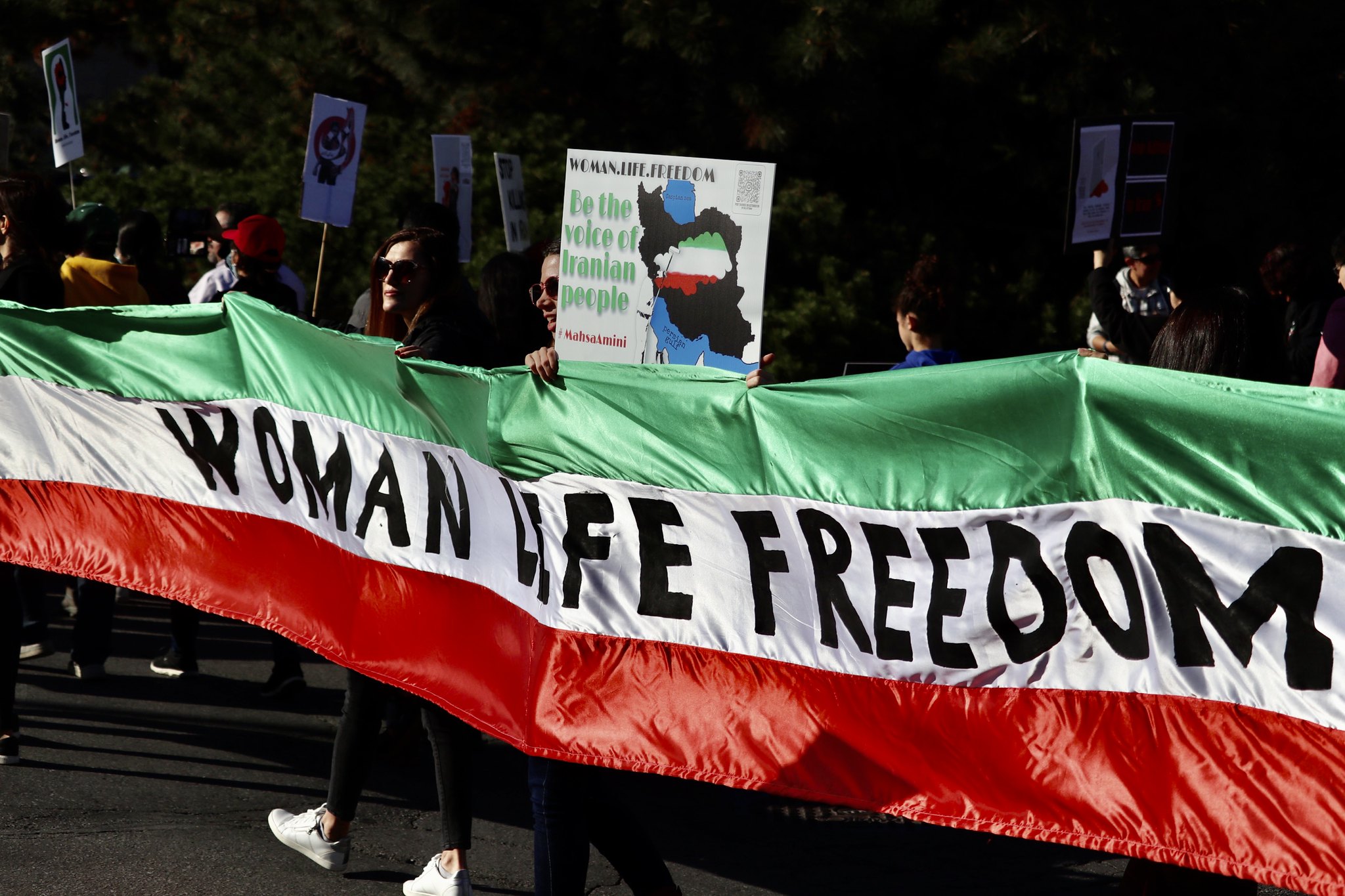 In 2005, after banning a number of reformist newspapers and candidates and in the wake of the US invasion of Iraq (noting the Shi'a majority in the south and east of that country), the conservative Mahmoud Ahmadinejad won the presidential election. There were threats from the United States and Israel over Iran's civilian nuclear program and its potential for weapons development, all of which strengthened the conservatives, despite the imposition of and ultimately
 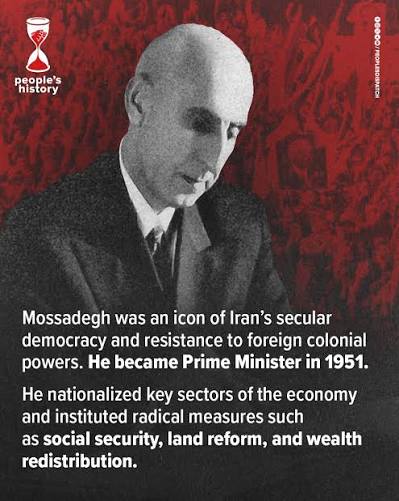 Any serious understanding of Iran must begin with the nationalist, secular, and social democratic government of Mohammad Mosaddegh from 1951-1953. If it seems strange to start a discussion of a contemporary war on events from 75 years ago, but everything flows in an unbroken chain from Mosaddegh's election as Prime Minister,
 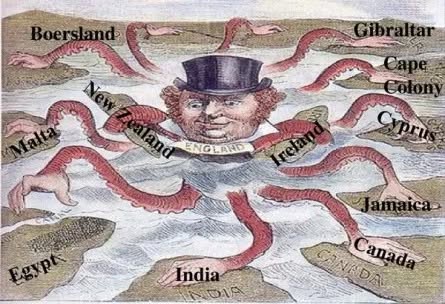 From the presentation to the Isocracy Annual General Meeting, March 25, 2026
 A Tibetan teacher, Chokyi Lodro, allegedly sanctioned harsh physical punishment for misbehaving monks. The original question was straightforward: if a figure regarded as enlightened engaged in behavior that appears immoral, how should Buddhists reconcile that? A discussion that followed, however, was anything but straightforward. Rather than engaging the question within a Buddhist framework, several participants pivoted to a familiar modern argument. They suggested that judging such behavior as "wrong" imposes Western moral standards onto a different culture. According to this line of thinking, moral judgments are culturally relative, and applying contemporary ethical standards to historical or non-Western contexts is a form of colonialism. One commenter explicitly framed criticism of Chokyi Lodro’s conduct as "Eurocentric chauvinism", arguing that we have no grounds to judge actions outside our own "lifeworld".
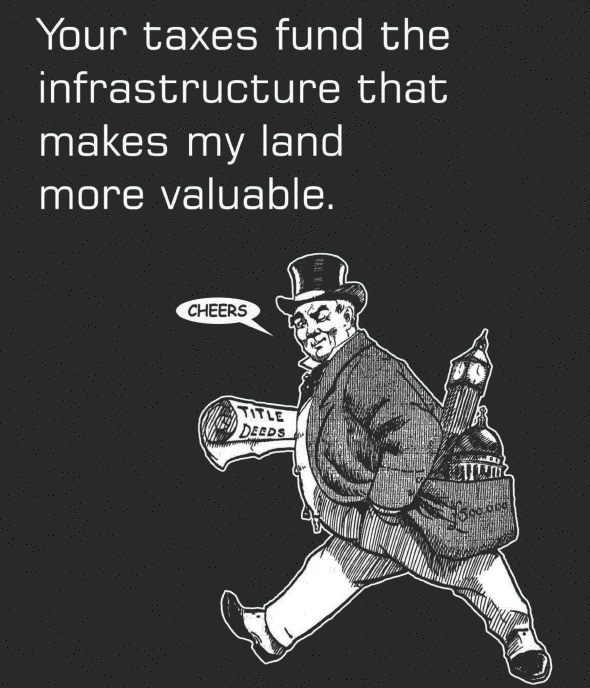 The following is heavily derived from two interviews on the podcast "Economics Explored" hosted by Gene Tully; namely
 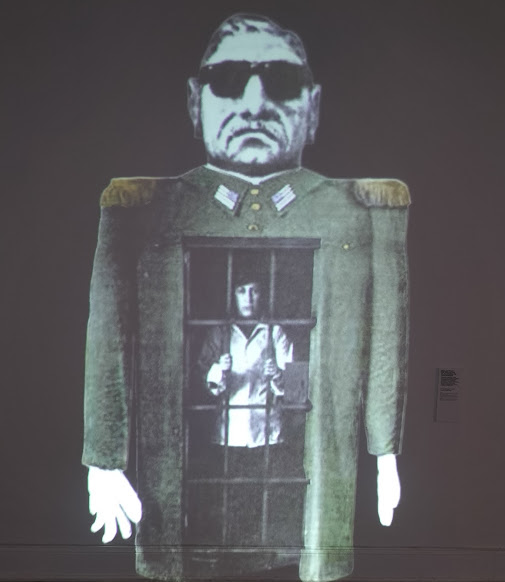 On January 3, the United States launched a military strike in Venezuela and abducted incumbent Venezuelan president Nicolás Maduro and his wife, Cilia Flores, transporting them to New York to face "narcoterrorism" charges. However, Trump and his administration have made it very clear that the action was undertaken to
  Libertarian social democracy and democratic socialism share a humane destination: a society where no one is crushed by poverty, concentrated power, or arbitrary domination. We diverge, however, on how to get there, what counts as freedom along the way, and where the journey ultimately ends.
 Aaron Bastani’s Fully Automated Luxury Communism envisions a world in which technology liberates humanity from scarcity, with the state guaranteeing the basic material and social preconditions of a dignified life. At the core of this vision is Universal Basic Services (UBS) — the collective provision of essentials in the realm of housing, transport, education, healthcare, and information — offered free at the point of use. UBS, as Ian Gough argues, reflects the idea that human beings share universal needs which cannot be met solely through markets, and that certain foundational sectors — the “foundational economy” — must be organized around collective provision, not commodification.