 Australia's former ambassador to China (2007-2011), APEC (2003-2005), and the World Trade Organisation (1998-2001), Geoff Raby, provides an entertaining and scholarly combination of personal stories, historical fact, and informed opinion on the dynamics of international relations in his book "Great Game On: The Contest for Central Asia and Global Supremacy". The title references the old "Great Game" between Russia and the UK over Central Asia in the 19th century, including the Russian invasion of some republics, the British invasion of Tibet, and the decline of the Qing dynasty in China. The basic question being addressed is whether China or Russia will become dominant in the Central Asian republics, sometimes referred to as "the 'stans", a reference to Kazakhstan, Uzbekistan, Tajikistan, Kyrgyzstan, and Turkmenistan (all former Soviet Republics), plus Afghanistan and the Chinese province of Xinjiang.
The subtitle of the books seems challenging: the idea that the contest between China and Russia over these republics could be a major part of a global contest for supremacy. But the opening chapters argue the case that the outcome in the 'stans will be a significant contribution to the outcome in the wider Eurasian context and all that follows, and for context, Rabey makes a significant point of outlining the fall of the US-supported regime in Afghanistan with similarities with their loss in the Vietnam War. As has been quipped (attributed to Norman Finklestein): "If you ever feel useless, remember it took 20 years, trillions of dollars and 4 US Presidents to replace the Taliban with the Taliban". Still, it even with Afghanistan in consideration, it is difficult to see how relative dominance in the central Asian republics will necessarily translate to Eurasian, let alone global, supremacy. Raby's argument hinges on opportunity costs: "Having achieved security in Eurasia, China can turn to project its prodigious power globally".
 Kropotkin’s Vision
 My philosophy of liberal-anarchism (or libertarian social democracy) consists of three insights: (1) communalist market-anarchism, the insight that social-anarchism and market-anarchism together are better than either of them are on their own — and this is particularly so with regard to the provision of law and law enforcement, (2) social-democratic anarchism, the insight that real-world anarchist municipalities (communes) are likely to develop liberal or social-democratic type institutions rather than communistic or capitalistic ones, and (3) dialectical libertarianism, the insight that what matters most in analyzing any policy is not whether or not it is formally libertarian but whether, within the context of the existing system, it tends to increase or decrease liberty — and, following from that insight, that policies that create within the existing system certain desirable features that resemble those that would arise naturally in a free society are to be preferred to “formally libertarian” policies that effectively take us further away from the ideal free (anarchist) society of our dreams.
 The historical divergence between the social anarchist (democratic confederalist) and the market-anarchist traditions has left a seemingly unbridgable chasm between two approaches to organizing a stateless society. The one side — represented by Pierre-Joseph Proudhon, Mikhail Bakunin, Peter Kropotkin, Murray Bookchin, and Abdullah Öcalan — emphasizes local autonomy and direct democracy. It proposes “to replace the police and the professional army with a popular militia — more specifically, a civic guard, composed of rotating patrols for police purposes and well-trained citizen military contingents for dealing with external dangers to freedom.”(Murray Bookchin, Libertarian Municipalism: The New Municipal Agenda) On the other side stand market-anarchists such as Gustave de Molinari, Benjamin Tucker, Murray Rothbard, David Friedman, and Morris and Linda Tannehill. These market-anarchists propose that a system of competitive private police could replace the government. While these schools of thought have often viewed one another with suspicion, I would like to propose a synthesis that I believe to be stronger than the position of either side on its own.
 It is commonly held by right-libertarians that taxation is theft. In his book Why? The Purpose of the Universe, Philip Goff makes an interesting argument to the contrary. Goff asks whether taxation ought to be morally or legally considered theft. He ultimately concludes that right-libertarians are, in fact, incorrect in their assertion that taxation is theft.
 Liberalism, properly understood, is not merely a justification for free markets or negative liberty. It is, at root, a philosophy of emancipation. Likewise, anarchism is not chaos, but the pursuit of a voluntary and non-dominating social order. When joined together and viewed through a dialectical libertarian lens, these traditions give birth to what I call liberal-anarchism.
 The 2025 Canadian federal election, held on April 28, and the 2025 Australian federal election, held on May 3, both have similarities that are worth exploring, despite some of their significant differences in electoral system and political parties. In both cases, sitting centre (Liberal Party of Canada) to centre-left (Australian Labor Party) governments had struggled in polls prior to the election against their right-wing rivals, the centre-right to right-wing Conservative Party of Canada and the Liberal National Coalition in Australia. In both cases, two very clear issues dominated the election campaigns: (i) cost of living and (ii) the effects of Donald Trump as the re-elected president of the United States.
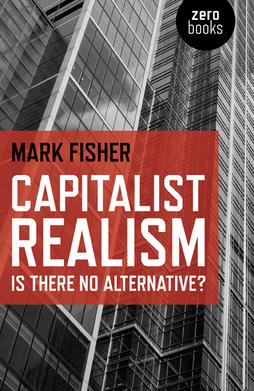 Sometimes there are books on political theory that are enticing in their title and vacuous in their content. Whilst many can simply be ignored, some are so impressive in both vectors that a review is justified, if only because a reader's suffrance is sufficient that they need to warn others. One such book is Mark Fisher's, "Capitalist Realism: Is There No Alternative?", published by the Zero Books (2009). The author, at the time of writing, is a Visiting Fellow in the Centre for Cultural Studies at Goldsmiths, University of London. He is a founding member of the Cybernetic Culture Research Unit at Warwick University, where he earned his doctorate.
 "Fascism" has become a malediction to evoke fear and loathing of the US Republican Party under Trump, Alternative für Germany (AfD), the British Reform Party, and other right-wing movements. It's a strongly charged term, but in this context but it is false and harmful. Strategically, it is better to understand what these movements actually are rather than simply using "fascism" a pejorative. We are not witnessing the rise of fascism, but rather a fall of globalist liberal and social democracy. It has exhausted its possibilities and is losing supporters, who are turning to the populist and national-conservative right in the vain hope of improvement.
 With the recent rise of machine learning and large language models, there is renewed interest in technological unemployment, that is, the displacement of jobs through the introduction of labour-saving devices. It is widely acknolwedged that technology causes short-term unemployment in a particular sector, the suggestion that it causes long-term unemployment has been largely considered fallacious; jobs lost to technology leads to increased productivity, lower real prices, and higher aggregate wages. Despite these historical examples, it is argued that new technologies are replacing employment without replacement in new sectors, ultimately trending toward the abolition of work. In our current political economy, a less than optimal vision of the future is presented, and alternatives must be explored.