 Socialism proper refers to the advocacy of some sort of collective, social, or public ownership of industry/enterprise and, usually, of land as well. We find many different varieties of socialism. Ricardian socialists advocate replacing private ownership of the means of production with worker-owned cooperatives. Marxists advocate public ownership by the State, which in turn would be run by the proletariat. Lange-Lerner socialism advocates public ownership of enterprise within a market system with central planning. Then there are the libertarian socialists, like Proudhon and Bakunin, who advocated worker-owned cooperatives alongside public ownership of land at the municipal level. Kropotkin’s variation of libertarian socialism had communal ownership, like decentralized Marxism minus the State, rather than independent worker-owned cooperatives as with Proudhon's mutualism and Bakunin’s collectivism. But all varieties of socialism have one common characteristic: they oppose private ownership of the means of production in favor of some sort of social ownership.
Capitalism, unlike socialism, refers more to the condition of things than the precise form of ownership. Capitalism is not private ownership and markets. There are countless examples of market economies with private enterprise that we would not regard as capitalism. Feudalism is a key example, as was medieval distributism. An essential characteristic of capitalism is the division of society into two classes, haves and have-nots, where the have-nots must work for the haves as wage-laborers in order to survive. Under capitalism, most people do not have any share of private ownership over the means of production, meaning that a small group of capitalists and landlords essentially rule over the masses. The vast majority of people under capitalism are not capitalists, which means that they must sell their labor to the capitalist class in order to survive. Wage-slavery is an essential characteristic of capitalism. For a system to be capitalism, it must have money, markets, and private ownership. It must be industrialized. Those are necessary but not sufficient conditions for classifying a system as capitalism. To be capitalism, wage labor must also be the normal mode of survival. Markets, private ownership of land and enterprise, and wage-slavery are the three necessary conditions that must be met in order for a system to constitute capitalism. There are other systems that also have division of people into haves and have-nots but do not constitute capitalism. Feudalism may have markets, private property, and division into haves and have-nots, but it doesn't have wage-labor as the norm and does not have an industrialized economy, so it is not capitalism.
 Exclusive interview with Om Amran on her Displacement from Daraa
 The longer this war goes on the more Assad tries to silence the truth. While he displaces thousands of Syrian families they never have the chance to speak out. What was it like in Daraa? What was it like to lose your home yet again at the hands of the President and the Russians? Where do they go? What do they do?
 Somebody said that the Alt-Right isn't really gaining popularity as much as it seems. Instead, they insisted that people like Ben Shapiro and Jordan Peterson are becoming more popular. To be clear, Shapiro and Peterson are Alt-Right. They're part of the same phenomena that gave us Richard Spencer and Steve Bannon. They aren't explicitly white supremacist like Matthew Heimbach and Christopher Cantwell, but they do give a nuanced and sophisticated critique of anti-racist, feminist, and anti-fascist ideas.
 After some decades of incremental progress following the end of the Cold War, there is doubt over the future of Europe, illustrated most dramatically by the rise of ethnocentric political parties in a number of European nation-states, and the "Brexit" referendum of 2016. To understand this current situation and examination of the context of Europe is necessary, and how European unity has threatened traditional superpowers in such a way that it is in their interest to weaken this unity. For those whose political allegiance is towards individual liberties and social democracy, the fate of Europe is critical, as this is the region which has shown greatest commitment to these ideals.
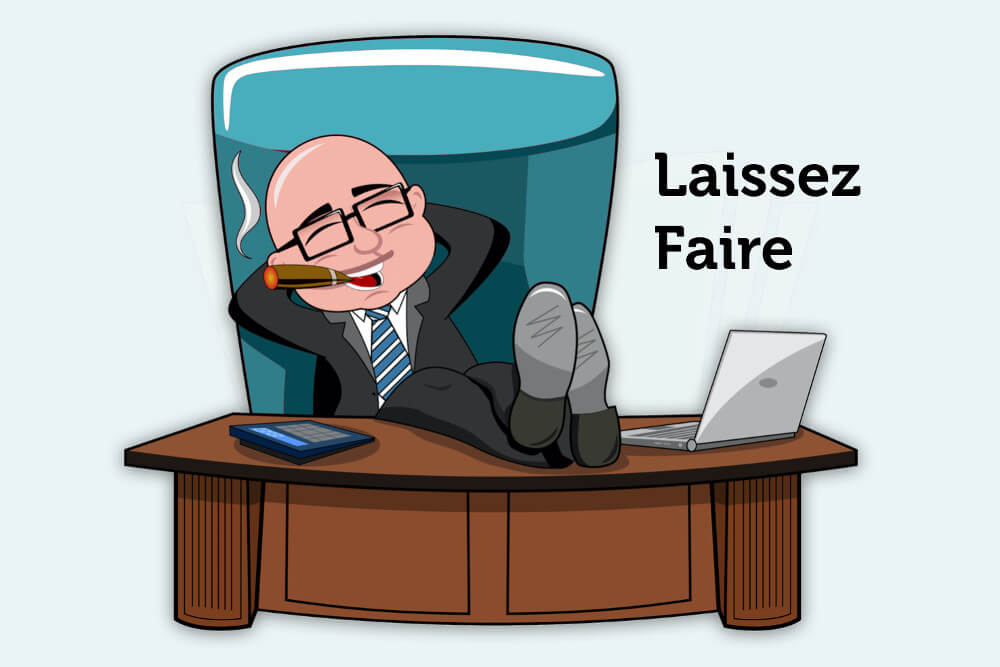 I am not a proponent of laissez-faire, but I do advocate free trade. Effective and beneficial market systems require a certain amount of government intervention. I believe, like F. A. Hayek and Hernando de Soto Polar, that government intervention should be non-arbitrary and designed to create rules and order that allow for rational economic planning. Markets only work if there is a system of law governing property and contracts and a system of courts, judges, or tribunals for arbitration and dispute resolution. De Soto has made the observation that “property rights is the precursor to addresses.” Enforcement of contracts is very difficult, if not impossible, without addresses. If you want to file a civil suit against someone that ripped you off, how are they going to summon the other party to court without an address to deliver the summons to? And how would you send the police after someone that robbed you without an address? So, government creates this framework for property and addresses that makes law-enforcement and adjudication possible. Furthermore, government creates the legal framework that allows corporations to issue shares, which allows businesses to get money to do what they do. All of these things that are basically necessary components of market systems are products of government. For markets to work efficiently, government must intervene but it must not intervene arbitrarily—that is, government intervention must follow predetermined rules that allow individuals to plan accordingly. The government must not have the authority to arbitrarily interfere in economic affairs.


 Edited by Joanne Roberts